Xinhua Headlines: How China's agrarian heartland finds its way to the inside track of industry

* For a province long regarded as an agricultural heartland, the ascent of Anhui's carmaking as a pillar industry signals a structural shift. It also offers a glimpse into how China's modernization has often proceeded -- through reforms anchored in local conditions, refined through experimentation, and expanded incrementally.
* From imperial efforts to revive agriculture to Xiaogang's more recent "big contract," Anhui's experience follows a consistent logic that reveals a recurring feature of China's development: reform forged in the crucible of immediate needs, tempered by practical testing, and extended step-by-step as solutions prove their worth.
* It began with land, advanced through reform, and has ultimately rested on industrial capability, built through repeated experimentation and adjustment.
by Xinhua writers Ma Yunfei, Chen Shangying, Wang Haiyue
HEFEI, Jan. 17 (Xinhua) -- As Chinese-branded vehicles increasingly emerge on the streets of Europe, the Middle East, and Africa, few passersby would guess that a significant share of these cars roll off the production lines of automakers hailing from a Chinese province long celebrated for its agricultural heritage.
Anhui, located in eastern China, has deep roots in farming. But since the launch of the country's reform and opening-up drive in the late 1970s, it has also built a robust industrial foundation. Today, this province of over 61 million residents is increasingly distinguished by its manufacturing sector, with its automobile production emerging as a pivotal player in the industrial landscape of the world's second-largest economy.
The numbers tell a compelling story. In the first 11 months of 2025, Anhui turned out about 3.34 million vehicles, of which 1.64 million were new energy vehicles (NEVs), and it shipped approximately 1.06 million cars overseas, placing the province first nationally on all three counts. Put differently, more than one in every eight NEVs made in China now originates in Anhui.
In 2025, China's vehicle exports reached 7.1 million units, registering a year-on-year growth of 21.1 percent, according to figures from the China Association of Automobile Manufacturers (CAAM). Anhui saw its vehicle export in the year soar 28.7 percent to about 1.23 million units, accounting for about 17.3 percent of the national total, according to provincial data.
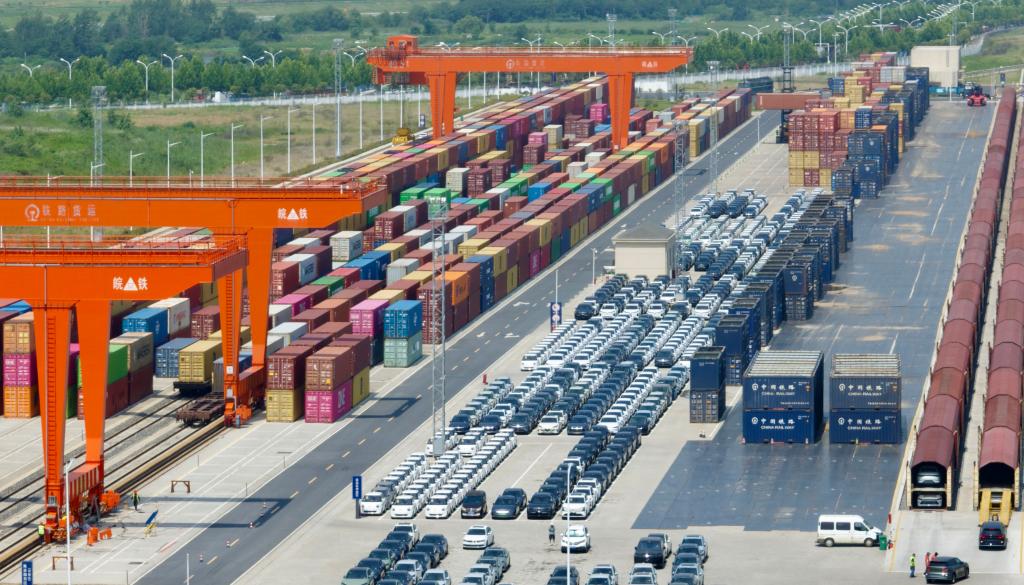
For a province long regarded as an agricultural heartland, the ascent of carmaking as a pillar industry signals a structural shift. It also offers a glimpse into how China's modernization has often proceeded -- through reforms anchored in local conditions, refined through experimentation, and expanded incrementally.
WHERE REFORM FIRST TOOK ROOT
Anhui's story begins with land. For centuries, the province formed part of China's agricultural backbone -- a role shaped as much by history as by geography. Fengyang County, located in what is now Chuzhou City, is both the birthplace of Zhu Yuanzhang, the first emperor of the Ming Dynasty (1368-1644), and home to Xiaogang Village, which is widely seen as the cradle of China's rural reform.
Zhu was born into a destitute farming household amid the collapse of the Yuan Dynasty (1271-1368), during a time of famine and social breakdown. Once in power, he moved swiftly to restore agricultural order, pushing peasants back to the land, encouraging land reclamation, expanding irrigation and cash-crop cultivation, and easing the tax burden to revive output.
Historical records show that by 1393, China's cultivated acreage had risen to about 56.7 million hectares -- more than twice the level recorded at the end of the Yuan Dynasty.
Centuries later, changes would again begin with farmers. In December 1978, 18 farmers in Xiaogang Village took risks in secretly signing an agreement to contract collective land to individual households, allowing farmers to manage their own production and retain the majority of their harvests. The arrangement, which was later called the "household contract responsibility system," spread across China within just a few years, unleashing a surge in farm productivity and lifting rural incomes.
Over the next 40-plus years, reform remained woven into Xiaogang's development. The village continued to test new arrangements in land use, collective property rights and rural industries. According to Li Jinzhu, first secretary of the village's Party committee, Xiaogang's collective economy has since grown steadily, distributing more than 20 million yuan (about 2.84 million U.S. dollars) in cumulative dividends to residents over the eight-year period from 2017 to 2024.
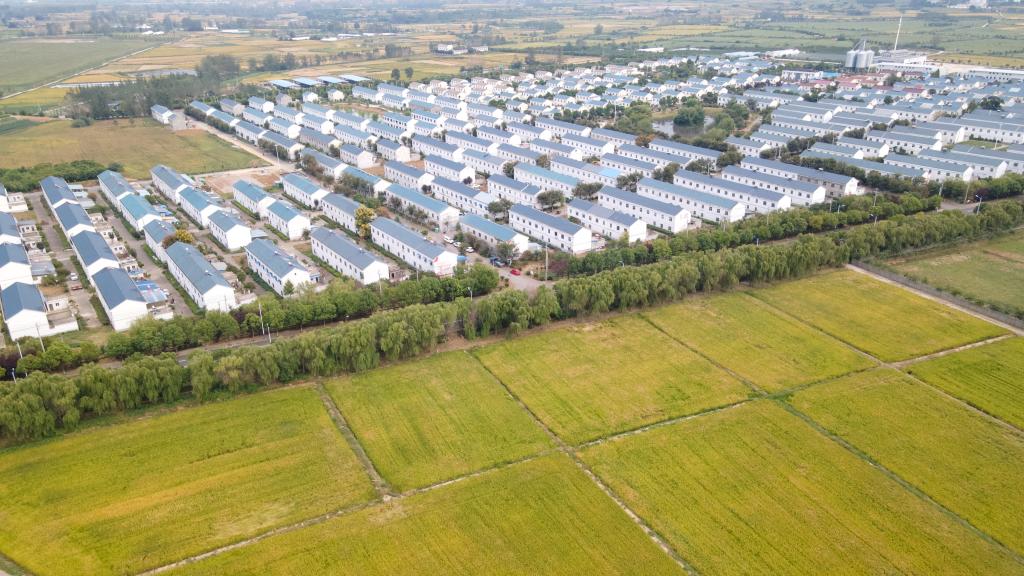
From imperial efforts to revive agriculture to Xiaogang's more recent "big contract," Anhui's experience follows a consistent logic that reveals a recurring feature of China's development: reform forged in the crucible of immediate needs, tempered by practical testing, and extended step-by-step as solutions prove their worth.
FROM FIELDS TO FACTORIES
The same logic would later shape Anhui's industrial ascent. The turnaround has been decades in the making. In 1978, Anhui's GDP stood at 11.4 billion yuan; today, it has surpassed the 5-trillion-yuan mark, a shift that has remade the province's economic identity without severing its agricultural roots.
Over the past few years, building on decades of industrialization, the province has undergone what local officials describe as a historical upgrade. Anhui, said Feng Kejin, director of the provincial department of industry and information technology, has accelerated its shift from an agriculture-heavy structure toward a stronger manufacturing base, and from a supplier of energy and raw materials to a center for emerging industries, joining the ranks of China's major industrial provinces.
This shift is visible in the data. During China's 14th Five-Year Plan period (2021-2025), the revenues of Anhui's industrial enterprises above designated scale climbed from 3.8 trillion yuan to 5.5 trillion yuan, bringing the province from 12th to sixth place among all the provincial-level regions. It now accounts for nearly 10 percent of the world's display panel output, 10 percent of China's cars and NEVs, as well as significant shares of the industrial robotics, photovoltaic components and household appliances sectors.
Crucially, industrial expansion has not come at the expense of farming. In 2025, Anhui planted about 7.33 million hectares of grain, which was the fourth highest nationwide, and recorded a harvest of 41.93 billion kilograms, which ranked sixth in the country and marked its highest yield on record.
Agricultural modernization measures have continued to bear fruit, with the contribution rate of agricultural sci-tech progress reaching 67 percent and the comprehensive mechanization rate of crop cultivation standing at 86 percent by 2024.
Anhui's strategy has been to safeguard agricultural stability while using manufacturing to lift overall income levels, according to Liu Zhiying, a professor at the School of Management, University of Science and Technology of China.
"The core driver has been reform and a shift in development thinking," Liu said. "Agriculture provides a foundation, but it can't generate sufficient wealth alone. Manufacturing, therefore, does the heavy lifting."
TURNING INNOVATION INTO INDUSTRY
Technology has been central to the reorientation. Anhui has cast itself not merely as a manufacturing base but as a source of sci-tech innovation, registering a series of advances, from record-setting nuclear fusion experiments to superconducting quantum computer prototype that outperforms conventional supercomputers in specialized tasks, as well as advanced systems aimed at future lunar exploration.
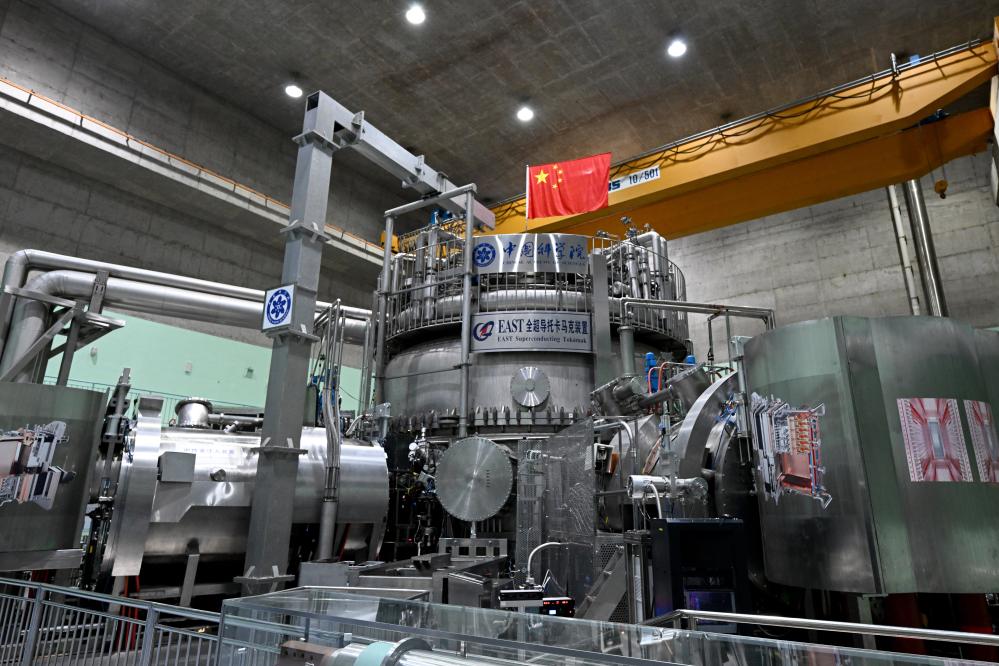
Equally important has been the translation of research into production. Anhui has built 242 technology incubators at or above provincial level, established China's first urban scenario application innovation promotion center, and trained thousands of technology managers to accelerate the journey from lab to market.
The effects are becoming visible. By the end of 2025, wheel-armed robots developed by Zerith, a Hefei-based robotics startup, have been deployed in airports and retail spaces, carrying out tasks such as cleaning and goods sorting.
"Government seed funding, talent policies and early access to real-world application scenarios have helped shorten the path to market," said Yang Wei, chief brand officer of Zerith.
The same mechanisms underpin Anhui's push into more capital-intensive sectors, including automobiles. Nowhere is Anhui's reinvention clearer than in its car industry. The province hosts seven vehicle makers, including Chery, NIO, Volkswagen Anhui and BYD Hefei, backed by more than 3,000 core parts suppliers. Together they constitute a largely self-contained automotive ecosystem, encompassing vehicle assembly, key components and after-sales services.
Anhui's rise has unfolded against a broader expansion of China's auto sector. Data released by the CAAM show that China's automobile production and sales both exceeded 34 million units last year, setting a new record and keeping the country first globally for the 17th consecutive year, with new energy vehicles emerging as the main driver of that growth.
The pace of expansion has been brisk. On Dec. 16, 2025, the 10,000th Maextro S800, which is a premium NEV model developed by Anhui-based automaker JAC Group and tech firm Huawei, rolled off the production line in the provincial capital of Hefei -- just 181 days after mass production began.
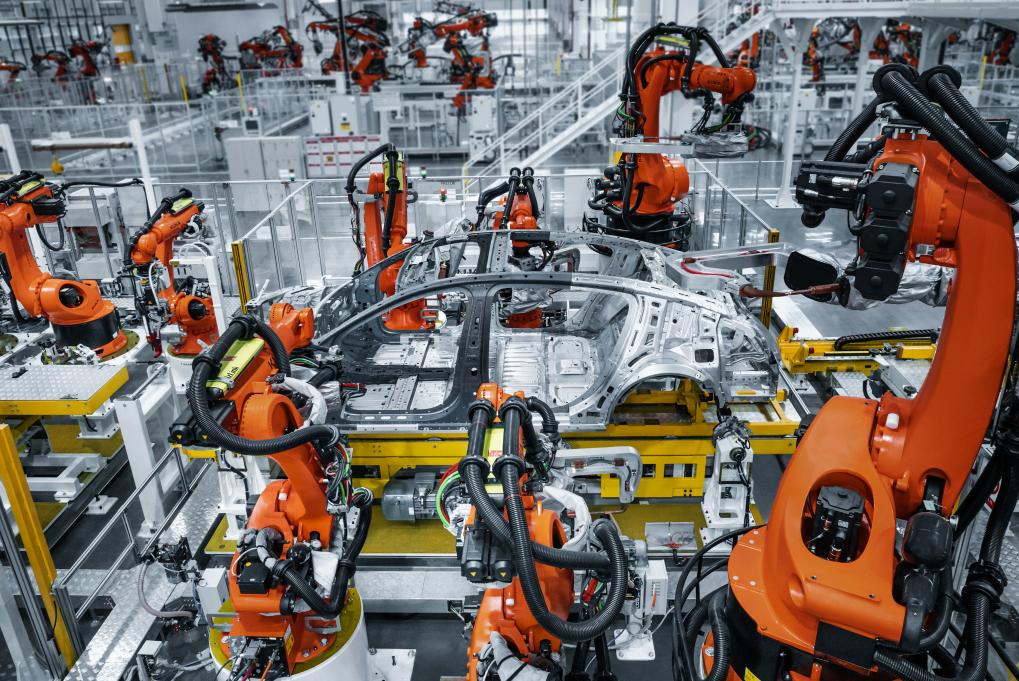
On the same day, global auto safety system giant Autoliv opened a new factory in the city, with an annual capacity of 3 million high-end steering wheels. Autoliv China President Sng Yih said choosing Anhui means access to a complete industrial chain and the efficiency of government services.
INSIDE THE "ANHUI MODEL"
Observers describe this approach as the "Anhui model." Its defining trait, Liu said, is the synergy between an efficient market and a well-functioning government. Local authorities devise industry-specific strategies and back them with capital, policy instruments and specialized teams, while fostering a fair market environment to drive high-quality development through competition.
In Hefei alone, 16 priority industrial chains are supervised by city leaders directly, with leading firms designated as cluster anchors. "Supporting such industries requires the city-wide mobilization of resources, as they typically need a long period of development before they can generate returns, and as they face great uncertainties," said Yuan Fei, vice mayor of Hefei.
State capital has also been used as a lever for private funds. By mid-2025, Hefei's state-owned funds had invested more than 210 billion yuan in strategic emerging industries, catalyzing a total project investment of over 810 billion yuan.
"When NIO was going through tough times, the government stepped in with a long-term vision -- they invested over 10 billion yuan but kept their hands off the wheel," said Jessie Wu, vice president of industrial planning at NIO. "Even as our stock took off, the local government chose to bow out gracefully. Their mission was always about boosting the industry as a whole, not chasing profits."
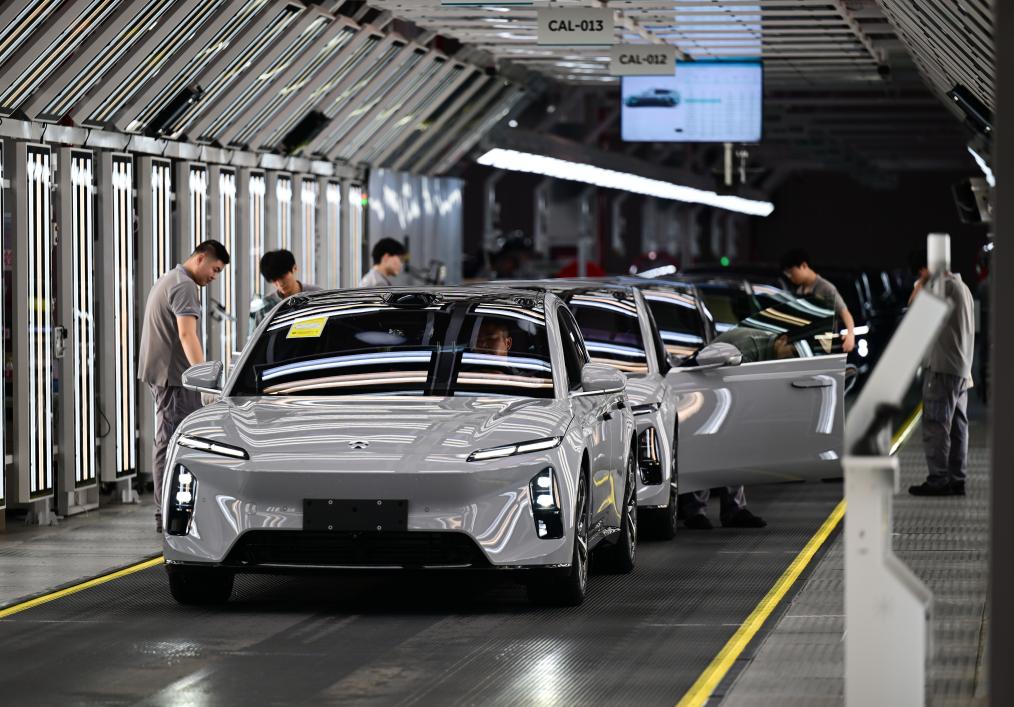
Geography has proved less of a constraint than expected. Despite its inland position, Anhui is now firmly embedded in the global trade landscape.
Opening up, too, has followed a long arc. In 1978, Anhui's total imports and exports amounted to just 10.63 million U.S. dollars; by 2025, the province's foreign trade reached 1.01 trillion yuan, a year-on-year increase of 17.3 percent, making Anhui the ninth provincial-level region in China to cross the one-trillion-yuan threshold.
Exports of "new trio" products -- electric vehicles, lithium-ion batteries and photovoltaic products -- were a particular bright spot. Their combined export value more than doubled year on year, placing Anhui sixth nationwide in this fast-growing category.
The province once lacked any direct outlet for foreign trade until Wuhu Port was approved for opening in 1980. Today it operates seven national first-class ports and four provincial second-class ones.
The transition of Anhui from a reliance on agriculture and heavy industry to global competitiveness in emerging sectors has proven to be solidly grounded and more than a provincial success story.
"It began with land, advanced through reform, and has ultimately rested on industrial capability, built through repeated experimentation and adjustment," Liu said.
(Video reporter: Qu Yan; video editors: Hong Ling, Roger Lott and Li Qin) ■










Comments