欧美精品在线第一页,久久av影院,午夜视频在线播放一三,久久91精品久久久久久秒播,成人一区三区,久久综合狠狠综合久久狠狠色综合,成人av一区二区亚洲精,欧美a级在线观看
         
        Feature: An American lady's unbelievable journey of Peking Opera
                         Source: Xinhua | 2018-12-30 02:57:15 | Editor: huaxia

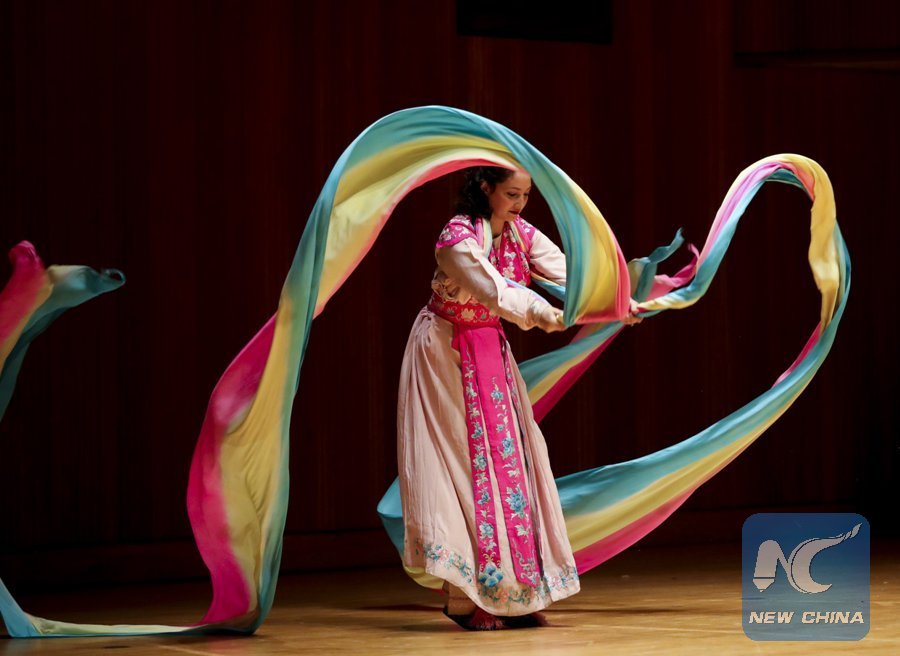
        Carrie Feyerabend from the Confucius Institute of Chinese Opera (CICO) at Binghamton University (BU), performs The Heavenly Maid Scatters Blossoms during the show titled "Amazing Chinese Opera" at the University at Buffalo in Buffalo city of New York State, the United States, Nov. 16, 2018. (Xinhua/Wang Ying)

        by Xinhua writers Ma Qian, Yang Shilong, Guo Peiran

        NEW YORK, Dec. 29 (Xinhua) -- Joe Sinicki would have mistaken Carrie Feyerabend as a Chinese performer, had he not watched on the spot her presentation of an excerpt of song and dance from Peking Opera classic The Heavenly Maid Scatters Blossoms at a recent show in the State University of New York at Buffalo.

        "She did pretty well. If I didn't see her, I thought she was maybe a Chinese girl," said Sinicki, who is a fan of the most influential Chinese drama form, in an interview with Xinhua.

        In the story of The Heavenly Maid Scatters Blossoms, the Buddha orders the heavenly maid to scatter blossoms in Vimalakirti Nirdesa's room in order to test his faith. The heavenly maid scatters the blossoms in front of him and proclaims the Buddha's words before she returns to the west.

        "It was cool. I like it. It's very abstract. There's a lot of symbolism," said Sinicki, who was enthralled by Feyerabend's superb dance with Shuixiu, literally Water Sleeves, one of the most skillful stunts in Peking Opera.

        Shuixiu refers to the extra-long dancing sleeves attached to the cuffs of a costume, which are used to perform various movements. There are hundreds of gesticulations in Shuixiu dancing, such as sleeves quivering, throwing and wigwagging.

        NEARLY 100 PERFORMANCES ACROSS U.S. EACH YEAR

        Feyerabend is one of the U.S. and Chinese artists from the Confucius Institute of Chinese Opera (CICO) at Binghamton University (BU) who were featured in the incredible show of the "Amazing Chinese Opera" in mid-November as the closing event of the university's International Education Week, an annual initiative to celebrate and promote international education and exchange.

        Founded in 2009, the BU's CICO is the first such place in the United States to offer Chinese Opera lessons through cooperation with the National Academy of Chinese Theater Arts (NACTA) in Beijing, while supplying tools and support for teaching Chinese language and culture.

        Brought up in Skaneateles, a small town deeply locked in New York State, Feyerabend studied Peking Opera in Beijing and now serves as an assistant to CICO director and is the only U.S. member of CICO's eight-people troupe.

        The 26-year-old soft-spoken lady described herself as "a Jack of all trades" because she played multiple roles of the Master of the Ceremony, Peking Opera performer and artistic director at almost each and every CICO show.

        "I really enjoy playing that role," she told Xinhua. "I really like being behind the stage and helping people make sure that they have a good performance. I'm just so proud of the work that they do. It's fun to watch every single time they make it look effortless."

        Apart from the on-stage work, Feyerabend helps in designing the troupe's repertoire. So far, the troupe has staged nearly 100 performances, leaving their footprints in more than 30 U.S. states since CICO was founded in 2009.

        The troupe normally puts together three to five Peking Opera acts, and fills the space with the musicians, such as a vocalist, a flutist and/or a player of Guzheng, the Chinese zither.

        In order to better entertain the local audience who have limited knowledge of Chinese culture, Feyerabend and her colleagues seek to do a good mix of music and Peking Opera, and give variations of different scenes from opera plays, while making an individual opera act no longer than 10 minutes.

        "For example last year we had a Huayi (vivacious young female character), so we did some things like 'Mudan Tian', or 'The Peony Garden.' This time we have a Wudan (female character who specializes in fighting with ancient Chinese weapons), so we have 'Hujia Zhuang' (the Hu Village), because that's her specialty," she said.

        Feyerabend has been working for CICO for more than three years. A large part of her job is preparation work to ensure that all is set for the troupe to perform across the country.

        "It's an administrative role, so there's a lot of paperwork that goes on behind the scenes," she said. "But being able to help out backstage logistically is really great when everything flows and goes right. So I know that I've put that together and had a hand in that. It makes me feel like I've done a good job."

        PASSION FOR MUTUAL UNDERSTANDING

        "CICO is the one and only Confucius Institute named after Peking Opera among its over 100 counterparts in the U.S.," said CICO director Chen Zuyan. "Our courses are fully integrated into the university's academic system."

        "That helps us be able to take American students who wouldn't otherwise know about this culture or anything it has to offer," Feyerabend added. "So then they can come to appreciate it in a more organic way as they grow up in an environment that's already inclusive and accepting of that culture."

        All of CICO's courses are offered for college credits. Such courses cover Chinese culture, Peking Opera, Chinese musical instruments, and Chinese Opera Stage Combat.

        Justina Baez, a biology sophomore who chose Peking Opera face painting course, told Xinhua that she was "caught off guard" the moment her Monkey King mask painting was complete.

        "Oh my God, like my face just transformed. How did that happen?" Baez said with a laugh. "It definitely takes you into another culture and I think that's really cool. Being able to embrace a culture that's not really yours through face painting, I really like it."

        The real significance of such classes, Feyerabend believes, lies in the fact that "they can fuel passion and also help mutual understanding develop."

        "So people aren't bigoted by the fact that they don't know," she noted. "To be able to foster those with the Confucius Institute, it's really great."

        CICO also holds outreach events throughout the year in large shopping malls and schools in other states, including Peking Opera shows, interactive workshops and exhibitions.

        "What I always like to do is to have our teachers do the face painting and the hair (for Peking Opera performers) out in the open before they can do the performance," Feyerabend said. "People can really see the whole process, because it takes a long time."

        In a recent exhibition CICO did at a local high school in the state of Montana, where they interacted with a group of theater students and then extended the event from one hour to two.

        The feedback of the local students impressed Feyerabend. "Some of the feedback we got from the students was if you think something is weird to begin with, still try it, because it's probably going to be fine. So they really enjoyed that," she said.

        Some of the students told her they would share the new skills with their parents. "So it's a good way to inter-generationally share the culture and a more organic way than just sitting in a classroom."

        Actually, CICO regularly holds workshops at neighboring high schools in a bid to inspire more teenagers to "set their own goal to have something similar happened to them."

        "If they put in hard work, then it can happen. So I think it's a really special thing for them to be able to look at this and to say okay that's achievable, I can do this too," she said.

        FANTASTIC RESOURCE BEYOND CLASSROOM

        Despite her major in Spanish at BU, Feyerabend chose to learn Chinese, because, as she put it, "it was a difficult language and she wanted to challenge herself."

        Standing out for her excellence, CICO picked Feyerabend to participate in Chinese Bridge, or the Chinese Proficiency Competition for Foreign College Students, for three times, from which she obtained two opportunities to study in China.

        The second time she participated in the beginners round in the United States in her sophomore year, she won first place and gained the opportunity to go to China to study Peking Opera at NACTA for a semester.

        That unique experience laid a solid foundation for her Chinese Bridge contest the following year and Peking Opera performing.

        "Going to NACTA and being able to study with those teachers and using those new skills in the upper level competition the following year was really a nice progression for me. I could feel myself growing both in my speaking and in my stage presence," she said.

        After she won the senior level round in the United States, she went to compete in Changsha, capital city of central China's Hunan Province.

        There she won the Confucius Institute scholarship, which she ended up studying a year later at Xiamen University, a time-honored comprehensive institution of higher learning in southeast China's Fujian Province.

        According to Feyerabend, learning Chinese culture has not only facilitated her interacting with Chinese people, but also helped her connect with people from all over the world.

        "It's definitely an interesting starting point of conversation, especially with Chinese coworkers and people that I've met since I've been in this position," she said.

        "I personally try to live by a guideline that you can't judge a book by its cover. You never know what's lying underneath," she said. "The only way to know what's lying underneath is to have conversations with people, get to know their story and get to know their background."

        The Confucius institutes in the United States are a fantastic resource for students to go beyond the classroom, interact with Chinese teachers and learn about different aspects of Chinese culture, she said.

        "That's something you can do only if you have a hands-on experience, and people who can offer these resources give you a chance and a willingness to take maybe a painting class or a Peking Opera class, or learn calligraphy," she said.

        Back to Top Close
        Xinhuanet

        Feature: An American lady's unbelievable journey of Peking Opera

        Source: Xinhua 2018-12-30 02:57:15

        Carrie Feyerabend from the Confucius Institute of Chinese Opera (CICO) at Binghamton University (BU), performs The Heavenly Maid Scatters Blossoms during the show titled "Amazing Chinese Opera" at the University at Buffalo in Buffalo city of New York State, the United States, Nov. 16, 2018. (Xinhua/Wang Ying)

        by Xinhua writers Ma Qian, Yang Shilong, Guo Peiran

        NEW YORK, Dec. 29 (Xinhua) -- Joe Sinicki would have mistaken Carrie Feyerabend as a Chinese performer, had he not watched on the spot her presentation of an excerpt of song and dance from Peking Opera classic The Heavenly Maid Scatters Blossoms at a recent show in the State University of New York at Buffalo.

        "She did pretty well. If I didn't see her, I thought she was maybe a Chinese girl," said Sinicki, who is a fan of the most influential Chinese drama form, in an interview with Xinhua.

        In the story of The Heavenly Maid Scatters Blossoms, the Buddha orders the heavenly maid to scatter blossoms in Vimalakirti Nirdesa's room in order to test his faith. The heavenly maid scatters the blossoms in front of him and proclaims the Buddha's words before she returns to the west.

        "It was cool. I like it. It's very abstract. There's a lot of symbolism," said Sinicki, who was enthralled by Feyerabend's superb dance with Shuixiu, literally Water Sleeves, one of the most skillful stunts in Peking Opera.

        Shuixiu refers to the extra-long dancing sleeves attached to the cuffs of a costume, which are used to perform various movements. There are hundreds of gesticulations in Shuixiu dancing, such as sleeves quivering, throwing and wigwagging.

        NEARLY 100 PERFORMANCES ACROSS U.S. EACH YEAR

        Feyerabend is one of the U.S. and Chinese artists from the Confucius Institute of Chinese Opera (CICO) at Binghamton University (BU) who were featured in the incredible show of the "Amazing Chinese Opera" in mid-November as the closing event of the university's International Education Week, an annual initiative to celebrate and promote international education and exchange.

        Founded in 2009, the BU's CICO is the first such place in the United States to offer Chinese Opera lessons through cooperation with the National Academy of Chinese Theater Arts (NACTA) in Beijing, while supplying tools and support for teaching Chinese language and culture.

        Brought up in Skaneateles, a small town deeply locked in New York State, Feyerabend studied Peking Opera in Beijing and now serves as an assistant to CICO director and is the only U.S. member of CICO's eight-people troupe.

        The 26-year-old soft-spoken lady described herself as "a Jack of all trades" because she played multiple roles of the Master of the Ceremony, Peking Opera performer and artistic director at almost each and every CICO show.

        "I really enjoy playing that role," she told Xinhua. "I really like being behind the stage and helping people make sure that they have a good performance. I'm just so proud of the work that they do. It's fun to watch every single time they make it look effortless."

        Apart from the on-stage work, Feyerabend helps in designing the troupe's repertoire. So far, the troupe has staged nearly 100 performances, leaving their footprints in more than 30 U.S. states since CICO was founded in 2009.

        The troupe normally puts together three to five Peking Opera acts, and fills the space with the musicians, such as a vocalist, a flutist and/or a player of Guzheng, the Chinese zither.

        In order to better entertain the local audience who have limited knowledge of Chinese culture, Feyerabend and her colleagues seek to do a good mix of music and Peking Opera, and give variations of different scenes from opera plays, while making an individual opera act no longer than 10 minutes.

        "For example last year we had a Huayi (vivacious young female character), so we did some things like 'Mudan Tian', or 'The Peony Garden.' This time we have a Wudan (female character who specializes in fighting with ancient Chinese weapons), so we have 'Hujia Zhuang' (the Hu Village), because that's her specialty," she said.

        Feyerabend has been working for CICO for more than three years. A large part of her job is preparation work to ensure that all is set for the troupe to perform across the country.

        "It's an administrative role, so there's a lot of paperwork that goes on behind the scenes," she said. "But being able to help out backstage logistically is really great when everything flows and goes right. So I know that I've put that together and had a hand in that. It makes me feel like I've done a good job."

        PASSION FOR MUTUAL UNDERSTANDING

        "CICO is the one and only Confucius Institute named after Peking Opera among its over 100 counterparts in the U.S.," said CICO director Chen Zuyan. "Our courses are fully integrated into the university's academic system."

        "That helps us be able to take American students who wouldn't otherwise know about this culture or anything it has to offer," Feyerabend added. "So then they can come to appreciate it in a more organic way as they grow up in an environment that's already inclusive and accepting of that culture."

        All of CICO's courses are offered for college credits. Such courses cover Chinese culture, Peking Opera, Chinese musical instruments, and Chinese Opera Stage Combat.

        Justina Baez, a biology sophomore who chose Peking Opera face painting course, told Xinhua that she was "caught off guard" the moment her Monkey King mask painting was complete.

        "Oh my God, like my face just transformed. How did that happen?" Baez said with a laugh. "It definitely takes you into another culture and I think that's really cool. Being able to embrace a culture that's not really yours through face painting, I really like it."

        The real significance of such classes, Feyerabend believes, lies in the fact that "they can fuel passion and also help mutual understanding develop."

        "So people aren't bigoted by the fact that they don't know," she noted. "To be able to foster those with the Confucius Institute, it's really great."

        CICO also holds outreach events throughout the year in large shopping malls and schools in other states, including Peking Opera shows, interactive workshops and exhibitions.

        "What I always like to do is to have our teachers do the face painting and the hair (for Peking Opera performers) out in the open before they can do the performance," Feyerabend said. "People can really see the whole process, because it takes a long time."

        In a recent exhibition CICO did at a local high school in the state of Montana, where they interacted with a group of theater students and then extended the event from one hour to two.

        The feedback of the local students impressed Feyerabend. "Some of the feedback we got from the students was if you think something is weird to begin with, still try it, because it's probably going to be fine. So they really enjoyed that," she said.

        Some of the students told her they would share the new skills with their parents. "So it's a good way to inter-generationally share the culture and a more organic way than just sitting in a classroom."

        Actually, CICO regularly holds workshops at neighboring high schools in a bid to inspire more teenagers to "set their own goal to have something similar happened to them."

        "If they put in hard work, then it can happen. So I think it's a really special thing for them to be able to look at this and to say okay that's achievable, I can do this too," she said.

        FANTASTIC RESOURCE BEYOND CLASSROOM

        Despite her major in Spanish at BU, Feyerabend chose to learn Chinese, because, as she put it, "it was a difficult language and she wanted to challenge herself."

        Standing out for her excellence, CICO picked Feyerabend to participate in Chinese Bridge, or the Chinese Proficiency Competition for Foreign College Students, for three times, from which she obtained two opportunities to study in China.

        The second time she participated in the beginners round in the United States in her sophomore year, she won first place and gained the opportunity to go to China to study Peking Opera at NACTA for a semester.

        That unique experience laid a solid foundation for her Chinese Bridge contest the following year and Peking Opera performing.

        "Going to NACTA and being able to study with those teachers and using those new skills in the upper level competition the following year was really a nice progression for me. I could feel myself growing both in my speaking and in my stage presence," she said.

        After she won the senior level round in the United States, she went to compete in Changsha, capital city of central China's Hunan Province.

        There she won the Confucius Institute scholarship, which she ended up studying a year later at Xiamen University, a time-honored comprehensive institution of higher learning in southeast China's Fujian Province.

        According to Feyerabend, learning Chinese culture has not only facilitated her interacting with Chinese people, but also helped her connect with people from all over the world.

        "It's definitely an interesting starting point of conversation, especially with Chinese coworkers and people that I've met since I've been in this position," she said.

        "I personally try to live by a guideline that you can't judge a book by its cover. You never know what's lying underneath," she said. "The only way to know what's lying underneath is to have conversations with people, get to know their story and get to know their background."

        The Confucius institutes in the United States are a fantastic resource for students to go beyond the classroom, interact with Chinese teachers and learn about different aspects of Chinese culture, she said.

        "That's something you can do only if you have a hands-on experience, and people who can offer these resources give you a chance and a willingness to take maybe a painting class or a Peking Opera class, or learn calligraphy," she said.

        010020070750000000000000011100001377076551
        主站蜘蛛池模板: 国产视频一区二区三区四区| 69久久夜色精品国产69–| 国产精品九九九九九| 欧美视频1区| 亚洲欧美一卡| 精品99免费视频| 99精品久久99久久久久| 国产在线不卡一| 日韩夜精品精品免费观看| 少妇av一区二区三区| 午夜黄色网址| 久久国产精品视频一区| 中文字幕欧美日韩一区 | 久久综合国产伦精品免费| 午夜影院5分钟| 国产中文字幕一区二区三区 | 91国偷自产一区二区介绍| 亚洲精品乱码久久久久久写真| 久久久久国产精品一区二区三区| 日韩一区高清| 成年人性生活免费看| 久久精品com| 久久久精品免费看| 99日本精品| 久久国产精久久精产国| 国产精品美女久久久免费| 精品国产乱码久久久久久软件影片| 国产韩国精品一区二区三区| 国产精品高潮呻| 国产麻豆一区二区三区精品| 国产中文字幕一区二区三区 | 狠狠色噜噜狠狠狠888奇米| 国产精品二区一区二区aⅴ| 国产在线视频二区| 欧美亚洲视频一区二区| 亚洲精品乱码久久久久久麻豆不卡| 日韩av一二三四区| 国产品久精国精产拍| 亚洲欧美制服丝腿| 日韩精品一区二区三区免费观看视频| 国产精品国精产品一二三区| 天天干狠狠插| 日韩毛片一区| 在线观看v国产乱人精品一区二区| 国产精品女人精品久久久天天| 国产日韩精品一区二区| 中文字幕一区二区三区不卡| 午夜大片网| 午夜老司机电影| 91久久精品久久国产性色也91| 欧美日韩综合一区| 欧美精品九九| 91精品免费观看| 一区二区三区在线观看国产| 欧美一区久久久| 国产日韩欧美亚洲综合| 国产精品欧美一区乱破| 偷拍自中文字av在线| 久久九九亚洲| 国产午夜精品av一区二区麻豆| 日本黄页在线观看| 午夜看片网| 亚洲国产精品一区二区久久hs| 日韩欧美一区精品| 国产日产精品一区二区| 国产精品无码专区在线观看| 国产精品欧美一区二区三区| 欧美一区二三区人人喊爽| 中文字幕一级二级三级| 狠狠插影院| 国产精品视频1区| 亚洲在线久久| 91精品久久久久久| 国语对白一区二区| 视频一区欧美| 色婷婷综合久久久久中文| 国产精品久久久久久一区二区三区 | 午夜看片网站| 欧美一区二区三区四区在线观看| 久久人91精品久久久久久不卡| 91免费国产视频| 91一区在线观看| 911久久香蕉国产线看观看| 国产精品日韩在线观看| 国产乱老一区视频| 午夜影院一级| 欧美综合国产精品久久丁香| 亚洲欧美国产日韩色伦| 久久激情综合网| 香港三日本8a三级少妇三级99 | 一区二区三区中文字幕| 亚洲欧美日韩一级| 亚洲精品国产主播一区| 久久国产精品-国产精品| 亚洲v欧美v另类v综合v日韩v| 亚洲神马久久| 国产乱人激情h在线观看| 久久99久久99精品免观看软件| 午夜毛片电影| 国产一区二区视频免费在线观看 | 天摸夜夜添久久精品亚洲人成 | 国产一区激情| 国产日韩欧美亚洲| 精品99在线视频| 亚洲精品主播| 欧美激情片一区二区| 国产男女乱淫视频高清免费| 日本精品99| 国产一区免费在线观看| 欧美午夜看片在线观看字幕| 国产一区二区视频播放| 少妇厨房与子伦免费观看| 综合久久一区| 国产欧美日韩在线观看| 国产区图片区一区二区三区| 国产一区影院| 国产在线卡一卡二| 狠狠躁夜夜躁人人爽天天天天97 | 国产品久精国精产拍| 久久99国产视频| 中文字幕av一区二区三区高| 午夜亚洲影院| 国产精品1区2区| 亚洲精品无吗| 男女午夜爽爽| 欧美日韩激情在线| 午夜爱爱电影| 国产99视频精品免费视频7| 国精偷拍一区二区三区| 免费超级乱淫视频播放| 日韩精品久久一区二区三区| 午夜爽爽视频| 国产一区二区手机在线观看| 欧美日韩久久一区| 欧美精品亚洲一区| 国产69精品久久99不卡解锁版| 欧美3级在线| 国产97免费视频| 免费精品一区二区三区视频日产| 国产精品久久人人做人人爽| 97久久国产亚洲精品超碰热| 国产精品免费一视频区二区三区| 国产91麻豆视频| 国产一区二区三区国产| 午夜国产一区| 欧美日韩国产在线一区二区三区| 日韩av电影手机在线观看| 蜜臀久久99静品久久久久久| 理论片午午伦夜理片在线播放| 91av一区二区三区| 日韩亚洲欧美一区| 911久久香蕉国产线看观看| 亚洲欧洲国产伦综合| 国产精品乱码一区| 日本高清一二三区| 午夜特片网| 91人人爽人人爽人人精88v| 国产欧美一区二区在线| 99久精品视频| 欧美一区二区久久| 久久精品手机视频| 99久久国产综合精品尤物酒店| aaaaa国产欧美一区二区| 国产一区二区国产| 欧美日韩久久一区二区| 精品久久不卡| 久久天天躁夜夜躁狠狠躁2022| 国产精品日韩在线观看| av午夜在线| 欧美精品免费看| 97国产婷婷综合在线视频,| 欧美激情视频一区二区三区免费| 国产精品日韩电影| 久久99视频免费| 久久密av| 亚洲理论影院| 午夜精品一二三区| 免费xxxx18美国| 一区二区欧美在线| 日日狠狠久久8888偷色| 欧美精品五区| 日韩午夜三级| 日韩欧美精品一区二区| 久久中文一区二区| 欧美日韩综合一区 | 国产一区二区免费在线| 亚洲精品一区在线| 久久综合二区| 欧美一区二区三区不卡视频| 日韩一级片免费观看| 一区二区在线视频免费观看| 天摸夜夜添久久精品亚洲人成| 国模少妇一区二区三区| 性欧美一区二区三区| 人人要人人澡人人爽人人dvd| 91精品国产综合久久国产大片| 性色av香蕉一区二区| 欧美精品日韩| 艳妇荡乳欲伦2| 午夜剧场a级免费| 久久福利视频网| 亚洲精品久久久久不卡激情文学| 久久精品爱爱视频| 国产伦理久久精品久久久久| 日韩av在线资源| 狠狠操很很干| 国产97久久| 在线国产精品一区二区| 99精品国产99久久久久久97| 国产人澡人澡澡澡人碰视| 中文在线√天堂| 国产乱了高清露脸对白| 久久久久久国产一区二区三区| 午夜爽爽视频| 欧美性二区| 欧美日韩卡一卡二| 中文字幕一区二区三区免费| 欧美xxxxhdvideos| 国产电影一区二区三区下载| 国产清纯白嫩初高生在线播放性色| 欧美三区二区一区| 久久精品入口九色| 国产精品影音先锋| 少妇高潮在线观看| 久久96国产精品久久99软件| 伊人av综合网| 欧美日韩国产精品一区二区| 免费91麻豆精品国产自产在线观看| 99国产精品一区| 久久久精品99久久精品36亚 | 久久九精品| 久久综合狠狠狠色97| 久久99久久99精品免观看软件 | av午夜影院| 国产不卡一区在线| 欧美精品在线观看一区二区| 国产色99| 日本精品一二区| 久久久99精品国产一区二区三区| 一级女性全黄久久生活片免费| 精品国产18久久久久久依依影院| 91一区二区三区在线| 欧美中文字幕一区二区| 日韩一区二区精品| 理论片午午伦夜理片在线播放 | 国产精品久久99|