欧美精品在线第一页,久久av影院,午夜视频在线播放一三,久久91精品久久久久久秒播,成人一区三区,久久综合狠狠综合久久狠狠色综合,成人av一区二区亚洲精,欧美a级在线观看
         
        Feature: Crunched U.S. kidney bean processor struggles to outlive trade tariffs
                         Source: Xinhua | 2018-07-31 00:45:07 | Editor: huaxia

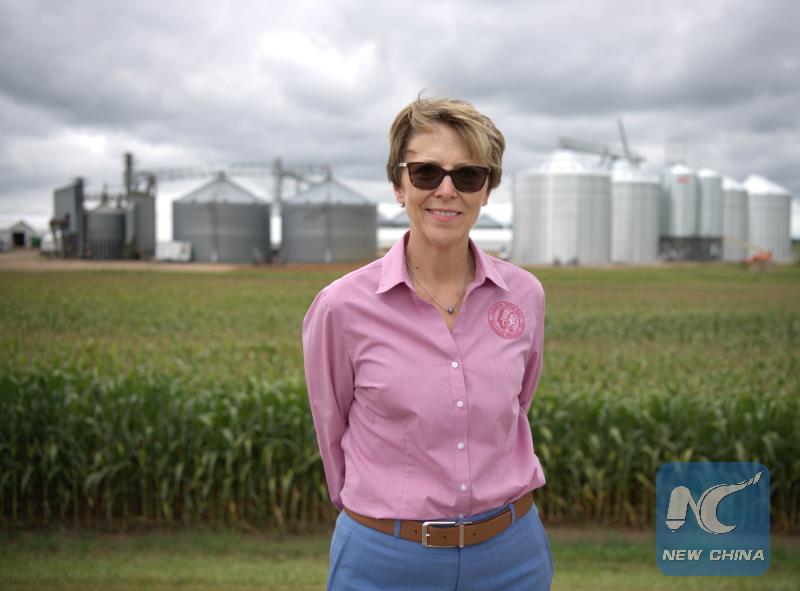
        Photo taken on July 26, 2018 shows Cindy Brown, a 62-year-old leading kidney bean processor, stands in front of her factory Located at the suburb of Menomonie, a small town in mid-western Wisconsin, the United States. (Xinhua/Liu Jie)

        by Xinhua writers Liu Chen, Hu Yousong, Liu Jie

        MADISON, the United States, July 29 (Xinhua) -- In her whole life, Cindy Brown, a 62-year-old leading kidney bean processor in the mid-west of U.S. state of Wisconsin, has never felt such a strong sense of "uncertainty."

        Her family-run business has been thrown into disarray since the European Union (EU), her major export market, added extra tariffs on imports of U.S. goods in June to retaliate against the U.S. trade tariffs. The kidney bean is on the EU's target list.

        "We have 60 loads of products (roughly 1,200 tons in total) that should have shipped last month and are not going to ship," the second generation kidney bean grower and processor told Xinhua in an interview on Thursday.

        The uncertainty is the worst part," Brown said.

        DEAL BREAKER

        As the largest red kidney bean processing company in North America, Chippewa Valley Bean, a Wisconsin-based family business with an annual output of 45,000 tons, exports 60 percent of its products to Europe.

        "This year we expected to do 25 million U.S. dollars worth of business with the European Union," said Brown in her office. "Of course, that's before the tariff."

        Following the U.S. tariffs on imported steel and aluminum, the EU, along with other countries, retaliated by imposing tariffs on products worth about 3.4 billion U.S. dollars, ranging from industrial goods to agricultural products.

        Brown's red kidney bean was among the targeted goods, which was asked to pay an extra 25-percent tariffs staring from June 22.

        "That was a deal breaker," said Brown with a frowning face.

        Due to the extra cost, a large portion of the company's done deals have been put in question.

        "About 20 percent (of the European buyers) at this point have said, nope, not going to take it," said Brown. "The majority of them just stood back and said, let's see what happens."

        Located at the suburb of Menomonie, a small town in mid-western Wisconsin surrounded by extensive lands of crops, Chippewa Valley Bean plant was rather quiet these days, with two basketball field-sized warehouses stuffed with piles of bags of processed red kidney beans.

        "Normally there would be trucks coming in and out of here all day," Russell Doane, Brown's father who founded the company in 1969, told Xinhua. "And that's not true today."

        "We hope that it will ultimately be solved," the 87-year-old said.

        But for Charles Wachsmuth, Brown's son who joined the family business six years ago, the damage could be permanent if there is no swift removal of the tariffs.

        "If the tariffs are still in effect in February, March (next year) ... we will see regions that don't traditionally do dark red kidney beans start to play the kidney beans," the third-generation who was in charge of the company's market development told Xinhua.

        It could be newcomers from East Africa or Ukraine, or more production in South America, Wachsmuth said. "Once somebody starts to grow crop, you can't stop them."

        To carry out the signed contracts, some buyers have suggested splitting the burden evenly with Chippewa Valley Bean, but even that was not a workable solution.

        "Our profit margins aren't that high," Brown told Xinhua explicitly. "If we were to pay half of that tariff, there wouldn't need to be a Chippewa Valley Bean next year."

        Selling products to the domestic market was beyond consideration, too. "We produce far too much for our U.S. consumption," said Brown.

        Meanwhile, as the result of a "rippling effect," the uncertainty in Brown's business will soon be passed on to the upstream in the supply chain. Over 100 red kidney bean growers providing raw materials for the company, which spread throughout the Midwest states like Minnesota, North and South Dakota, and Wisconsin, will begin to feel the pain.

        "We have to reduce our grower prices to help pay for a portion of this (tariffs)," Brown said.

        TRADE, NOT AID

        When the prospect remains dim, a glimpse of hope has appeared. On Wednesday, U.S. President Donald Trump talked with visiting President of the European Commission Jean-Claude Juncker on Wednesday, with the two agreeing to suspend new tariffs and negotiate trade practices to shun a trade war.

        However, the news did not cheer the deeply troubled family up. "We have no idea how long it will take, where it's going," Brown said.

        "I do know that the European Trade Commission has not taken kidney beans off their list," she added.

        In another attempt to mitigate pains felt by farmers, the Trump administration on Tuesday announced a 12-billion-U.S.-dollar aid plan, which unsurprisingly got a cool reception nationwide.

        "We want trade, not aid," Chippewa Valley Bean shared the prevailing opinion among U.S. farmers.

        Just a one-time aid certainly could not solve our problem, said Tom Kwak, the operation director in the company.

        Besides, Brown questioned where the U.S. government could get the money needed.

        "And that's just only for this year. That's not for next year," she added. "It's not sustainable."

        Born in 1931, Doane has experienced the aftermath of the Great Depression in the 1930s. For him, the trade tariffs ordered by Trump claiming to protect U.S. businesses and farmers made him recall the implementation of the Smoot-Hawley bill in 1930.

        The act, which raised U.S. tariffs on over 20,000 imported goods, was signed by then U.S. President Herbert Hoover and has been seen by many as exacerbating the U.S. recession into a worldwide depression.

        "That tariff bill was designed to protect American jobs," said Doane, "It had the opposite effect."

        Back to Top Close
        Xinhuanet

        Feature: Crunched U.S. kidney bean processor struggles to outlive trade tariffs

        Source: Xinhua 2018-07-31 00:45:07

        Photo taken on July 26, 2018 shows Cindy Brown, a 62-year-old leading kidney bean processor, stands in front of her factory Located at the suburb of Menomonie, a small town in mid-western Wisconsin, the United States. (Xinhua/Liu Jie)

        by Xinhua writers Liu Chen, Hu Yousong, Liu Jie

        MADISON, the United States, July 29 (Xinhua) -- In her whole life, Cindy Brown, a 62-year-old leading kidney bean processor in the mid-west of U.S. state of Wisconsin, has never felt such a strong sense of "uncertainty."

        Her family-run business has been thrown into disarray since the European Union (EU), her major export market, added extra tariffs on imports of U.S. goods in June to retaliate against the U.S. trade tariffs. The kidney bean is on the EU's target list.

        "We have 60 loads of products (roughly 1,200 tons in total) that should have shipped last month and are not going to ship," the second generation kidney bean grower and processor told Xinhua in an interview on Thursday.

        The uncertainty is the worst part," Brown said.

        DEAL BREAKER

        As the largest red kidney bean processing company in North America, Chippewa Valley Bean, a Wisconsin-based family business with an annual output of 45,000 tons, exports 60 percent of its products to Europe.

        "This year we expected to do 25 million U.S. dollars worth of business with the European Union," said Brown in her office. "Of course, that's before the tariff."

        Following the U.S. tariffs on imported steel and aluminum, the EU, along with other countries, retaliated by imposing tariffs on products worth about 3.4 billion U.S. dollars, ranging from industrial goods to agricultural products.

        Brown's red kidney bean was among the targeted goods, which was asked to pay an extra 25-percent tariffs staring from June 22.

        "That was a deal breaker," said Brown with a frowning face.

        Due to the extra cost, a large portion of the company's done deals have been put in question.

        "About 20 percent (of the European buyers) at this point have said, nope, not going to take it," said Brown. "The majority of them just stood back and said, let's see what happens."

        Located at the suburb of Menomonie, a small town in mid-western Wisconsin surrounded by extensive lands of crops, Chippewa Valley Bean plant was rather quiet these days, with two basketball field-sized warehouses stuffed with piles of bags of processed red kidney beans.

        "Normally there would be trucks coming in and out of here all day," Russell Doane, Brown's father who founded the company in 1969, told Xinhua. "And that's not true today."

        "We hope that it will ultimately be solved," the 87-year-old said.

        But for Charles Wachsmuth, Brown's son who joined the family business six years ago, the damage could be permanent if there is no swift removal of the tariffs.

        "If the tariffs are still in effect in February, March (next year) ... we will see regions that don't traditionally do dark red kidney beans start to play the kidney beans," the third-generation who was in charge of the company's market development told Xinhua.

        It could be newcomers from East Africa or Ukraine, or more production in South America, Wachsmuth said. "Once somebody starts to grow crop, you can't stop them."

        To carry out the signed contracts, some buyers have suggested splitting the burden evenly with Chippewa Valley Bean, but even that was not a workable solution.

        "Our profit margins aren't that high," Brown told Xinhua explicitly. "If we were to pay half of that tariff, there wouldn't need to be a Chippewa Valley Bean next year."

        Selling products to the domestic market was beyond consideration, too. "We produce far too much for our U.S. consumption," said Brown.

        Meanwhile, as the result of a "rippling effect," the uncertainty in Brown's business will soon be passed on to the upstream in the supply chain. Over 100 red kidney bean growers providing raw materials for the company, which spread throughout the Midwest states like Minnesota, North and South Dakota, and Wisconsin, will begin to feel the pain.

        "We have to reduce our grower prices to help pay for a portion of this (tariffs)," Brown said.

        TRADE, NOT AID

        When the prospect remains dim, a glimpse of hope has appeared. On Wednesday, U.S. President Donald Trump talked with visiting President of the European Commission Jean-Claude Juncker on Wednesday, with the two agreeing to suspend new tariffs and negotiate trade practices to shun a trade war.

        However, the news did not cheer the deeply troubled family up. "We have no idea how long it will take, where it's going," Brown said.

        "I do know that the European Trade Commission has not taken kidney beans off their list," she added.

        In another attempt to mitigate pains felt by farmers, the Trump administration on Tuesday announced a 12-billion-U.S.-dollar aid plan, which unsurprisingly got a cool reception nationwide.

        "We want trade, not aid," Chippewa Valley Bean shared the prevailing opinion among U.S. farmers.

        Just a one-time aid certainly could not solve our problem, said Tom Kwak, the operation director in the company.

        Besides, Brown questioned where the U.S. government could get the money needed.

        "And that's just only for this year. That's not for next year," she added. "It's not sustainable."

        Born in 1931, Doane has experienced the aftermath of the Great Depression in the 1930s. For him, the trade tariffs ordered by Trump claiming to protect U.S. businesses and farmers made him recall the implementation of the Smoot-Hawley bill in 1930.

        The act, which raised U.S. tariffs on over 20,000 imported goods, was signed by then U.S. President Herbert Hoover and has been seen by many as exacerbating the U.S. recession into a worldwide depression.

        "That tariff bill was designed to protect American jobs," said Doane, "It had the opposite effect."

        010020070750000000000000011100001373579881
        主站蜘蛛池模板: 色婷婷久久一区二区三区麻豆| 99久久婷婷国产综合精品草原| 国产88在线观看入口| 国产欧美一区二区三区在线| 97人人澡人人爽人人模亚洲| 日韩精品一区二区三区免费观看视频| 精品无人国产偷自产在线| 日本一区二区在线观看视频| 国产伦高清一区二区三区| 国产一区二区中文字幕| av午夜影院| 在线国产精品一区| 国产精品国产三级国产专区52| 欧美网站一区二区三区| 国产乱淫精品一区二区三区毛片| 亚洲精品日韩色噜噜久久五月| 久久一区二| 国产精品亚洲二区| 99久久国产综合精品女不卡| 欧美日韩一区二区三区不卡视频| 午夜性电影| 国产亚洲综合一区二区| 海量av在线| 亚洲国产精品网站| 亚洲国产美女精品久久久久∴| 久久人91精品久久久久久不卡| 欧美一级久久精品| 午夜毛片电影| 欧美日韩国产专区| 久久99久久99精品免观看软件| 夜夜夜夜曰天天天天拍国产| 狠狠躁狠狠躁视频专区| 狠狠色噜噜狼狼狼色综合久| 97精品超碰一区二区三区| 国产精品中文字幕一区二区三区 | 精品一区二区在线视频| 国产在线精品一区| 在线视频不卡一区| 97精品国产aⅴ7777| 亚洲欧美v国产一区二区| 国产一区日韩一区| 国产一区日韩精品| 国产1区2区3区| 91超碰caoporm国产香蕉| 性old老妇做受| 国产女性无套免费看网站| 久久久久久久亚洲国产精品87| 久久96国产精品久久99软件| 日韩av中文字幕第一页| 鲁丝一区二区三区免费| 理论片高清免费理伦片| 国产极品一区二区三区| 国产麻豆一区二区| 中文字幕区一区二| 日日夜夜亚洲精品| 亚洲一区中文字幕| 日韩精品久久一区二区三区| 午夜情所理论片| 中文字幕一区一区三区| 国产精品免费观看国产网曝瓜| 久久久999精品视频| 国产麻豆一区二区三区在线观看| 色噜噜狠狠一区二区| 日韩欧美一区精品| 欧美一区二区三区免费播放视频了| 91精品视频一区二区三区| 狠狠色噜噜狠狠狠狠2021免费| 99热久久精品免费精品| 在线国产一区二区| 99精品国产一区二区三区麻豆| 欧美日韩国产精品一区二区| 国产精品天堂网| 欧美精品第一区| 国产91色综合| 日本神影院一区二区三区| 国产乱人伦精品一区二区三区| 色婷婷综合久久久中文一区二区| 精品一区电影国产| 国产日韩一区二区在线| 午夜电影一区| 欧美高清视频一区二区三区| 97久久超碰国产精品红杏| 狠狠色丁香久久婷婷综| 国产亚洲精品久久777777 | 国产一区在线视频观看| 国产精品一二三在线观看| 国91精品久久久久9999不卡| 亚洲精品一品区二品区三品区| 国产精品视频免费看人鲁| 国产伦精品一区二区三区电影| 日韩欧美中文字幕精品| 国产精品二区一区| 欧美日本91精品久久久久| 欧美精品一区二区久久久| 欧美国产在线看| 久久精品国产99| 亚洲精品乱码久久久久久按摩| 国产高清在线观看一区| 狠狠色噜噜狠狠狠狠米奇7777| 欧美极品少妇xxxxⅹ| 国产精品不卡在线| 亚洲精品一区中文字幕| 国产免费区| 亚洲国产偷| 少妇高潮一区二区三区99小说| 国产一区二区中文字幕| 69久久夜色精品国产69–| 国产玖玖爱精品视频| 日本高清二区| 精品久久久久一区二区| 午夜av男人的天堂| 亚洲国产99| 亚洲欧美国产一区二区三区 | 91精品久久久久久久久久| 欧美高清xxxxx| 欧美乱偷一区二区三区在线 | 国产在线一区不卡| 性色av色香蕉一区二区| yy6080影院旧里番乳色吐息| 欧美激情视频一区二区三区| 国产精品5区| 亚洲午夜精品一区二区三区电影院 | 久久aⅴ国产欧美74aaa| 国产一区二区黄| 欧美一区免费| 亚洲国产一区二区久久久777| 精品国产区| 中文字幕在线一区二区三区| 亚洲精品国产suv| 中文字幕日韩一区二区| 国产精品一区二区av麻豆| 亚洲精品97久久久babes| 国产综合亚洲精品| 国产日韩精品一区二区三区| 国产视频精品久久| 国产精品天堂| 久久网站精品| 精品久久国产视频| 国产精品丝袜综合区另类| 日日噜噜夜夜狠狠| 96国产精品| 欧美久久一区二区三区| 色综合欧美亚洲国产| 一区二区三区在线影院| 精品一区电影国产| 亚洲四区在线观看| 日韩av一区不卡| 日本精品一二三区| 久久99亚洲精品久久99果| 国产精品久久99| 久久99久久99精品蜜柚传媒| 久久影视一区二区| 少妇bbwbbwbbw高潮| 一区二区三区欧美视频| 夜夜嗨av一区二区三区中文字幕 | 少妇bbwbbwbbw高潮| 国产一区二区三区色噜噜小说| 香蕉av一区二区三区| 国产乱码一区二区| 国产精品视频二区不卡| 国产乱xxxxx国语对白| 国产精品日韩精品欧美精品| 欧美乱妇高清无乱码免费| 97国产婷婷综合在线视频,| 国产精品视频久久| 精品国产一二三四区| 日本不卡精品| 国产一区二区免费在线| 性色av香蕉一区二区| 日本一区二区在线观看视频| 国产精品色在线网站| 亚洲精品丝袜| 丝袜美腿诱惑一区二区| 国产欧美日韩另类| 国产精品久久人人做人人爽| 羞羞视频网站免费| 91亚洲欧美日韩精品久久奇米色 | 黄毛片在线观看| 午夜国产一区二区| 国产日韩精品一区二区| 亚洲精品国产综合| 午夜一区二区三区在线观看| 高清在线一区二区| 欧美一区二区三区免费看| 国产精品18久久久久久白浆动漫| 国产精品二十区| 少妇bbwbbwbbw高潮| 麻豆91在线| 欧美在线观看视频一区二区| 国产精品久久久久激情影院| 国产三级国产精品国产专区50| 91丝袜国产在线观看| 销魂美女一区二区| 久久噜噜少妇网站| 亚洲精品中文字幕乱码三区91| 久久久久国产精品嫩草影院| 公乱妇hd在线播放bd| 免费毛片a| 国产日本欧美一区二区三区| 狠狠色狠狠色合久久伊人| 亚洲精品久久久久中文第一暮| 亚洲乱强伦| 国产日韩一区在线| 国产精品国产三级国产专区53| 狠狠色综合欧美激情| 中文字幕在线视频一区二区| 国产福利一区在线观看| 国模一区二区三区白浆| 免费xxxx18美国| 午夜黄色大片| 国产精品一二三区视频网站| 日韩亚洲欧美一区二区| 国产一区二区极品| 日韩一级片免费视频| 91精品美女| 久久网站精品| 高清欧美xxxx| 国产v亚洲v日韩v欧美v片| 狠狠色噜噜狠狠狠888奇米| 国产精品一区一区三区| 夜夜爽av福利精品导航| 亚洲四区在线观看| 日韩精品久久一区二区| av午夜电影| 国产1区在线观看| 免费高潮又黄又色又爽视频| 久爱视频精品| 中文字幕一区二区三区又粗| 国产日韩欧美不卡| 热久久一区二区| 国产经典一区二区三区| 99精品视频免费看| 好吊妞国产欧美日韩免费观看网站| 92久久精品| 国产欧美精品一区二区三区小说| 91精品中综合久久久婷婷| 国产一二区精品| 午夜影院一级| 午夜毛片在线观看| 欧美日本三级少妇三级久久| 91一区二区三区在线| 久久久精品久久日韩一区综合| 蜜臀久久99精品久久久| 精品99在线视频| 欧美一区二区三区艳史| 国产精品乱战久久久|